
The Comparison Trap
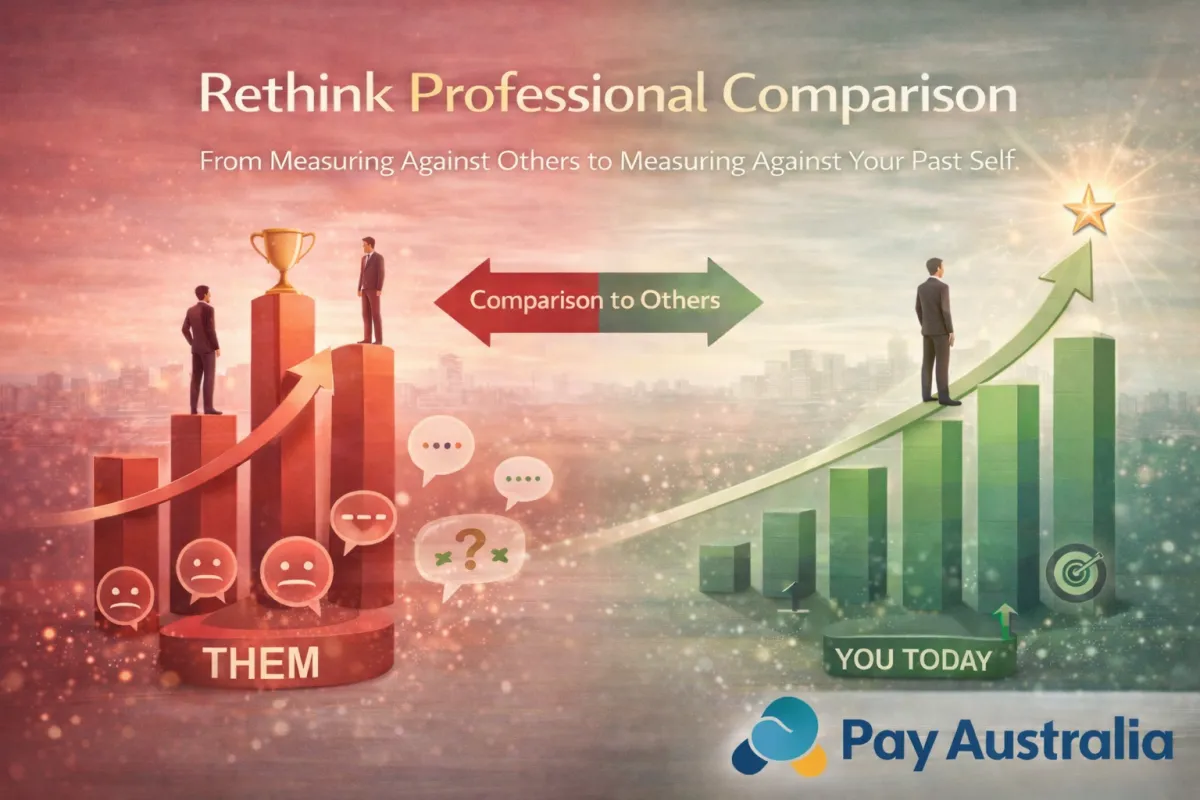
The Comparison Trap – Why Competing Against Others Guarantees Misery While Competing Against Yesterday's Self Drives Growth
How to redirect competitive energy from external comparison to internal progress in your professional life
The Essential Idea
Professional comparison is a rigged game that guarantees dissatisfaction: you're comparing your messy internal reality against carefully curated external presentations, measuring your comprehensive struggles against others' selective highlights. Social media and workplace visibility have intensified this trap, creating constant exposure to peers' achievements while obscuring their setbacks, doubts, and full context. The antidote isn't eliminating competitive drive—that energy is valuable—but redirecting it toward the only meaningful benchmark: your former self. When you shift from asking "Am I better than them?" to "Am I better than I was yesterday?", you transform comparison from a source of anxiety into a driver of genuine progress. This approach doesn't breed complacency; it creates sustainable growth by focusing your energy on variables you actually control. You don't know anyone else's full story, but you know yours intimately. That's where real development happens.
Here's an uncomfortable truth: Do you compare yourself to others?
Of course you do. We all do. The colleague who got promoted ahead of you. The university peer is now running their own successful venture. The professional acquaintance posts about their latest achievement on LinkedIn. The person in the adjacent office seems to close deals effortlessly while you're grinding through rejection after rejection.
These comparisons feel automatic, almost involuntary. You see someone else's success and immediately measure yourself against it. Sometimes it motivates you. More often, it just makes you feel inadequate.
There's a fundamental problem with this comparison: it's based on incomplete, distorted information that guarantees dissatisfaction regardless of your actual progress.
The Rigged Game of External Comparison
When you compare yourself to others, you're playing a game with asymmetric information. You have comprehensive access to one data set—your own experience—and highly selective access to everyone else's.
You know your doubts, your setbacks, your false starts, your moments of incompetence, your financial pressures, your relationship struggles, your health challenges. You experience your life in high definition, including all the mundane, difficult, and unflattering moments that constitute most of human existence.
What do you know about others? The curated highlights. The LinkedIn announcement about their promotion, without context about the organisational politics, the sacrifices required, or whether they're even happy in the role. The conference presentation that looked polished, without seeing the weeks of preparation, the rejected proposals that preceded it, or the imposter syndrome they felt while delivering it. The business success story without understanding the family wealth that funded it, the strained relationships in building it, or the stress keeping them awake at night.
You're comparing your comprehensive behind-the-scenes struggle against everyone else's carefully edited highlight reel. This isn't a fair fight. It's a rigged game that guarantees misery.
The Social Media Amplification Effect
Social media hasn't created comparison—humans have always measured themselves against others—but it has intensified the frequency, visibility, and distortion of professional comparison to unprecedented levels.
LinkedIn, in particular, creates a relentless stream of others' achievements. Someone in your network just got promoted. Another closed a major deal. Someone else is speaking at an industry conference. A former colleague has launched a startup that just raised funding. The algorithm ensures you see success after success after success.
What you don't see: the person who got promoted is struggling in their new role. The deal came after months of near-misses and knockbacks. The conference speaker has crippling anxiety about public speaking. The funded startup has a massive burn rate and existential concerns about its runway.
Australian workplace culture adds its own flavour to this dynamic. We value success but are ambivalent about displaying it too openly—the tall poppy syndrome. This creates an interesting tension: people feel pressure to demonstrate achievement while simultaneously feeling uncomfortable about appearing too successful. The result is often carefully calibrated displays of success: significant enough to maintain professional credibility, modest enough to avoid cultural backlash.
This makes comparison even more insidious. You're not just comparing against obvious bragging—which you could dismiss—but against what appears to be understated, authentic success. If they're succeeding while actively downplaying it, imagine how far behind you must be.
The Psychological Cost of Constant Comparison
Chronic comparison produces several predictable psychological outcomes, none of which are conducive to actual performance or well-being.
Imposter Syndrome Amplification
When you constantly measure yourself against others' visible achievements, you reinforce the belief that everyone else is genuinely competent while you're merely faking it. You attribute your successes to luck or circumstance while assuming others' successes reflect genuine capability. This becomes a self-fulfilling prophecy: the anxiety created by comparison undermines your actual performance, confirming your belief that you're not as capable as others.
Misallocated Competitive Energy
Competition can be productive—it motivates, raises standards, and drives performance. But when you're competing against people whose full circumstances you don't understand, you're directing that energy poorly. You might be pushing yourself toward achievements that don't actually align with your values, circumstances, or definition of success, simply because someone else achieved them first.
Diminished Satisfaction with Genuine Progress
Perhaps most destructively, external comparison prevents you from appreciating your own growth. You achieve something meaningful, but instead of satisfaction, you immediately think of someone who's achieved more. Your progress becomes invisible to you because you're always looking at someone else's position rather than measuring your own trajectory.
Decision-Making Based on Others' Paths
Comparison doesn't just affect how you feel—it influences what you do. You make career decisions based on what seems to work for others rather than what actually suits your circumstances, strengths, and aspirations. You pursue opportunities because they'll look impressive externally rather than because they'll develop you meaningfully. Your career becomes a performance for an imagined audience rather than a genuine journey.
The Alternative: Competing Against Your Former Self
The antidote to destructive external comparison isn't eliminating competitive drive—that energy is valuable. It's redirecting it toward the only benchmark that actually matters: your former self.
Instead of asking "Am I as successful as they are?", ask "Am I more capable than I was last month?"
This isn't semantics. It's a fundamental shift in how you conceptualise progress and success.
When you compete against yesterday's self, several things change:
1. You're Working with Complete Information
You actually know your starting point. You understand your constraints, capabilities, and context. You can measure genuine progress rather than comparing incomplete snapshots. This makes your assessment realistic rather than distorted.
2. You're Focused on Variables You Control
You can't control others' circumstances, advantages, or trajectories. You can control your own effort, learning, discipline, and choices. When your benchmark is internal, your competitive energy goes toward things you can actually influence.
3. Your Progress Becomes Visible
When you track your own trajectory rather than comparing positions, you start to see growth that external comparisons obscure. You're writing more clearly than six months ago. You're more confident in client meetings than last year. You're managing your time more effectively than last quarter. This progress is real and meaningful, even if someone else is further along their own different path.
4. You Define Success on Your Own Terms
External comparison imposes others' definitions of success on you. Internal comparison allows you to define success based on your actual values, circumstances, and aspirations. Maybe for you, success right now is maintaining work-life balance while building skills, not maximising promotion speed. Maybe it's developing genuine expertise rather than visible credentials. When you compete against yourself, you get to decide what winning means.
Practical Implementation: Making Internal Comparison Real
Shifting from external to internal comparison requires deliberate practice. Here are concrete strategies:
1. Create Your Own Scoreboard
Identify 3-5 specific capabilities or outcomes you're genuinely trying to improve. These should reflect what actually matters to you, not what impresses others. Examples might include quality of client relationships, technical skill in a specific area, ability to manage stress effectively, clarity of written communication, or consistency in important habits.
Track these monthly. The specific metrics matter less than creating visibility into your own trajectory. When you can see you're writing more clearly, managing difficult conversations more effectively, or maintaining better work-life boundaries than three months ago, that progress becomes real and satisfying.
2. Practice Comparison Awareness
You can't eliminate comparison entirely—it's too ingrained. But you can notice when you're doing it and consciously redirect. When you catch yourself comparing to someone else, explicitly ask: "What about my own progress?" This interrupts the automatic pattern and rebuilds the neural pathway toward internal focus.
3. Curate Your Information Diet
If certain social media feeds consistently trigger unproductive comparison, limit exposure. This isn't about avoiding reality—it's about recognising that heavily curated highlight reels aren't reality. You can stay professionally connected without mainlining a constant stream of others' achievements.
4. Celebrate Your Own Milestones
When you achieve something meaningful based on your own standards, acknowledge it properly. Don't immediately diminish it by thinking of someone who's achieved more. Your progress deserves recognition independent of anyone else's position.
4. Seek Context, Not Just Outcome
When you do notice others' success—and you will—try to understand the full context rather than just the outcome. Often, when you actually talk to successful people, you discover challenges, trade-offs, and complexities that weren't visible from the outside. This doesn't diminish their achievement, but it makes comparison less automatic by revealing the incomplete nature of external observation.
5. Reframe "Behind" as "Different Path"
When you catch yourself thinking you're "behind" someone else, you need to consciously reframe: you're on a different path with different circumstances, constraints, and destinations. Behind implies you're in a race with a single finish line. In reality, there are infinite paths to infinite destinations. Your job is to navigate your path effectively, not to replicate someone else's.
When Comparison is Actually Useful
To be clear: not all comparison is destructive. Some forms of external awareness are genuinely valuable.
Benchmark Learning
Studying how others approach problems, develop skills, or navigate challenges can be instructive. The key distinction is whether you're learning from them or measuring yourself against them. Learning asks, "What can I extract from their approach that applies to my context?" Comparison asks, "Why am I not where they are?"
Market Reality Checks
Understanding industry standards and market rates helps you avoid radically underperforming due to a lack of awareness. But there's a difference between "I should be earning roughly within this range given my experience" and "Why is my peer earning $10,000 more than me?"
Inspiration from Possibility
Seeing others achieve things can expand your sense of what's possible. Someone from a similar background succeeding in a challenging field might inspire you to attempt something you'd dismissed as unrealistic. The distinction is whether their success expands your possibilities or contracts your self-worth.
The key differentiator: useful comparison is informational and oriented toward learning or calibration. Destructive comparison is evaluative and oriented toward judgment of your adequacy.
The Complacency Concern
A common worry about internal comparison: won't this breed complacency? If you're only competing against yourself, what prevents you from setting low standards and declaring victory?
This concern misunderstands the psychology of internal competition. Complacency emerges from disconnection between your standards and your actions—from knowing you could do better but choosing not to. That's not created by internal focus; if anything, internal focus makes that gap more visible, not less.
External comparison, paradoxically, can actually enable complacency. When you're focused on others' positions, you can rationalise poor performance: "At least I'm ahead of X." Internal comparison removes that escape route. You either progressed or you didn't.
Moreover, genuine internal competition tends to be more demanding than external comparison, not less. When you're honest about your own capabilities and trajectory, you set standards based on what you're actually capable of rather than what appears impressive externally. Those standards are often higher and more personally meaningful.
Building a Growth Identity
Ultimately, shifting from external to internal comparison isn't just a technique—it's about building an identity around growth rather than position.
Position is inherently relative. You're ahead or behind based on how you compare to others. Growth is absolute. You're either developing, or you're not, independent of anyone else's trajectory.
When your identity centres on growth, several things shift. Setbacks become learning opportunities rather than evidence of inadequacy. Others' success becomes interesting rather than threatening—you're curious about their journey rather than anxious about your relative position. Your career becomes intrinsically motivated rather than driven by external validation.
This doesn't mean becoming indifferent to outcomes or external recognition. It means those things become byproducts of genuine development rather than the primary drivers of your choices and self-worth.
The Uniqueness of Your Context
It's worth remembering that you truly don't know anyone else's full story.
That colleague who seems to have it all together? You don't know about their health struggles, their family pressures, or their private doubts. The peer who's advancing quickly? You don't know about their financial cushion, their connected network, or the sustainability of their current pace. The successful entrepreneur? You don't know about their previous failures, their current stress levels, or whether they'd trade their situation for yours.
This isn't about diminishing others' achievements—they may have worked incredibly hard and made smart choices. It's about recognising that external observation provides radically incomplete information.
You have complete information about exactly one professional journey: your own. That's where your attention, energy, and competitive drive should focus.
The Question That Matters
Spreadsheets might show you where you rank relative to peers. LinkedIn might display others' career highlights. Industry events might make you aware of others' achievements.
But none of that tells you what you actually need to know: are you developing in ways that matter? Are you building capabilities that serve your actual aspirations? Are you moving forward on a path that's meaningful to you?
Those questions only have answers when you stop looking sideways at others and start looking backward at your own trajectory.
The comparison game is rigged. You're playing with incomplete information against an impossible standard. But there's one competition you can win: the competition against who you were yesterday.
Track your own progress. Celebrate your own growth. Fix your own weaknesses. Build your own definition of success.
Are you better than you were yesterday? That's the only question that deserves your competitive energy.
Frequently Asked Questions
Q: My organisation has forced rankings and relative performance reviews—I literally have to compare myself to others. How do I focus on internal growth when external comparison directly affects my career progression?
A: You're right that many organisations structurally embed external comparison through relative performance management systems. The key is distinguishing between awareness of relative positioning and deriving self-worth from it. You need to understand where you stand in organisational rankings—that's career-relevant information. But you don't need to let that ranking define your sense of competence or progress. Treat relative position as a single data point on your current market reality, while keeping your primary focus on capability development. Ask yourself: "Regardless of where I rank this period, what capabilities have I genuinely improved?" Often, the most effective response to forced ranking systems is actually to focus intensely on your own skill development—because genuine capability growth eventually translates into better relative performance anyway. The people who navigate these systems most successfully are typically those who stay focused on concrete skill-building rather than getting psychologically consumed by the ranking itself. Additionally, track your own metrics alongside organisational ones—your personal scoreboard of capabilities matters more for long-term career success than any single period's relative ranking.
Q: I work in a competitive industry where keeping up with peers isn't optional—if I don't match their achievements, I'll genuinely fall behind in career opportunities. Isn't internal comparison a luxury I can't afford?
A: This concern assumes internal and external awareness are mutually exclusive—they're not. Understanding industry standards and maintaining competitive positioning is different from chronic self-evaluation through comparison. You can be strategically aware of market expectations without making every peer's achievement a referendum on your adequacy. Here's the practical distinction: external awareness asks, "What capabilities and achievements does my market value?" and uses others' trajectories as a guide to what's possible and what's valued. Internal focus asks, "Am I developing those capabilities more effectively than I was six months ago?" The most successful people in competitive industries typically combine both: they're acutely aware of market standards but internally focused on their own capability development. Consider this: if you spend the next year obsessively comparing yourself to peers, you'll be anxious and distracted. If you spend it focused on genuine capability development, you'll actually become more competitive. Your concern about falling behind is valid—but it's best addressed through focused development, not by spending psychological energy on comparison. The professionals who advance in competitive fields are usually those who get very good at specific, valuable things, not those who are most aware of where everyone else stands.


